

Construction Daily Site Logbook: The Ultimate Guide for Accurate Site Reporting and Project Control
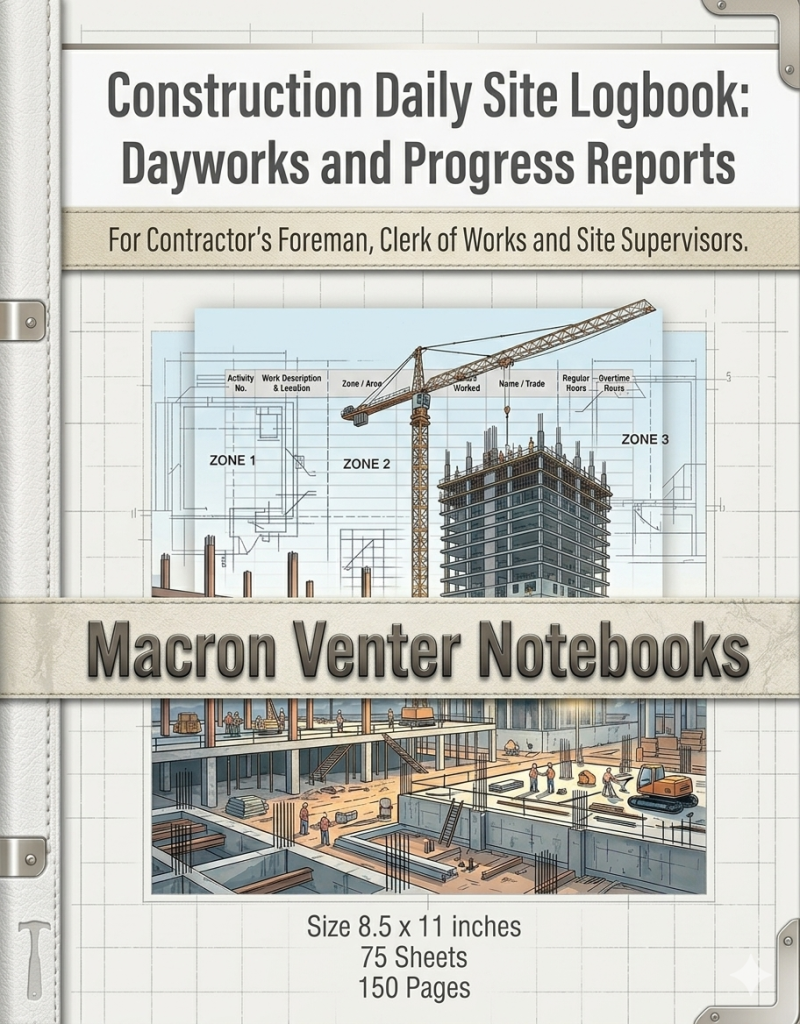
Get it on Amazon >> Construction Daily Site Logbook Dayworks and Progress Reports – By Macron Venter
In the fast-paced world of construction, documentation is not optional—it’s essential. From tracking daily progress to managing disputes and ensuring accountability, one tool stands out as indispensable: the construction daily site logbook.
Whether you’re a contractor, site supervisor, foreman, or quantity surveyor, maintaining a structured daily record can dramatically improve project efficiency, cost control, and legal protection.
This in-depth guide explores everything you need to know about construction daily site logbooks—what they are, why they matter, how to use them effectively, and what features to look for.
What Is a Construction Daily Site Logbook?
A construction daily site logbook (also known as a site diary or daily report book) is a structured record used to document all activities, conditions, and events occurring on a construction site each day.
It serves as the official, chronological record of site operations, including:
- Work completed
- Labour and subcontractors on site
- Plant and equipment usage
- Materials delivered and used
- Weather conditions
- Delays and disruptions
- Safety incidents
Think of it as the single source of truth for everything that happens on site.
Why a Construction Daily Site Logbook Is Essential
1. Legal Protection and Dispute Resolution
Construction disputes often arise over:
- Delays
- Variations
- Payment claims
A properly maintained logbook provides verifiable evidence of:
- Weather delays
- Labour shortages
- Site instructions
- Work progress
👉 In many cases, the contractor with better records wins the dispute.
2. Accurate Progress Tracking
Daily logs allow you to track:
- Percentage completion
- Work in progress
- Productivity rates
This data is crucial for:
- Interim valuations
- Progress reports
- Programme monitoring
3. Cost Control and Financial Management
A logbook helps monitor:
- Labour usage
- Plant utilization
- Material consumption
This supports:
- Cost analysis
- Budget tracking
- Dayworks verification
4. Improved Communication
A structured logbook ensures all stakeholders are aligned:
- Contractors
- Consultants
- Clients
It provides a clear record of:
- Instructions issued
- Work executed
- Issues encountered
5. Safety and Compliance Monitoring
Daily logs track:
- Safety incidents
- Toolbox talks
- PPE compliance
This helps maintain:
- Regulatory compliance
- Safe working environments
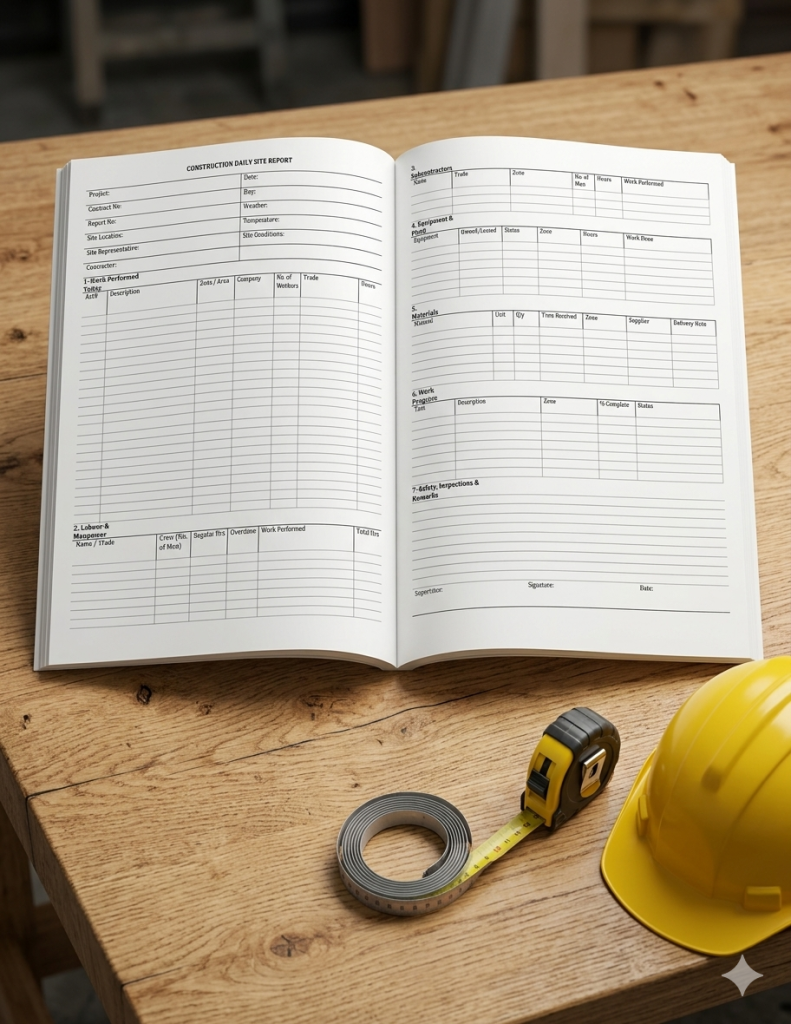
Construction Daily Site Logbook: Dayworks and Progress Reports by Macron Venter.
Key Features of a Construction Daily Site Logbook
Not all logbooks are created equal. A professional logbook should include structured sections that capture critical site data.
📊 Core Features Table
| Feature | Description | Why It Matters |
|---|---|---|
| Daily Entries | Date, project details | Ensures chronological records |
| Weather Conditions | AM/PM weather, delays | Supports delay claims |
| Labour Records | Workforce and trades | Tracks productivity |
| Work Progress | Activities completed | Measures progress |
| Plant & Equipment | Usage and downtime | Controls costs |
| Materials Tracking | Deliveries and usage | Prevents wastage |
| Delays & Issues | Constraints and disruptions | Supports claims |
| Safety Records | Incidents and compliance | Legal protection |
| Visitor Log | Inspections and meetings | Accountability |
What Should Be Recorded Daily?
A good construction daily logbook captures detailed site information. Below is a breakdown of essential entries.
📅 1. General Project Information
- Project name
- Location
- Contract number
- Date and day
🌦️ 2. Weather Conditions
- Morning and afternoon weather
- Temperature (if required)
- Rainfall or extreme conditions
- Lost working hours
👉 Weather records are critical for extension of time (EOT) claims.
👷 3. Labour and Workforce
Record:
- Number of workers
- Trades present
- Subcontractors
- Overtime hours
This helps analyze:
- Productivity rates
- Labour efficiency
🏗️ 4. Work Progress
Include:
- Activities completed
- Work in progress
- Areas worked on
- Percentage completion
🚜 5. Plant and Equipment
Track:
- Equipment used
- Hours worked
- Idle time
- Breakdowns
👉 This is essential for plant costing and claims.
📦 6. Materials Delivered and Used
Record:
- Materials received
- Quantities
- Suppliers
- Usage on site
⚠️ 7. Delays and Issues
Document:
- Site constraints
- Design changes
- Labour shortages
- External disruptions
🦺 8. Safety Records
Include:
- Incidents
- Near misses
- Toolbox talks
- Safety inspections
👥 9. Visitors and Instructions
Record:
- Consultants on site
- Client visits
- Instructions issued
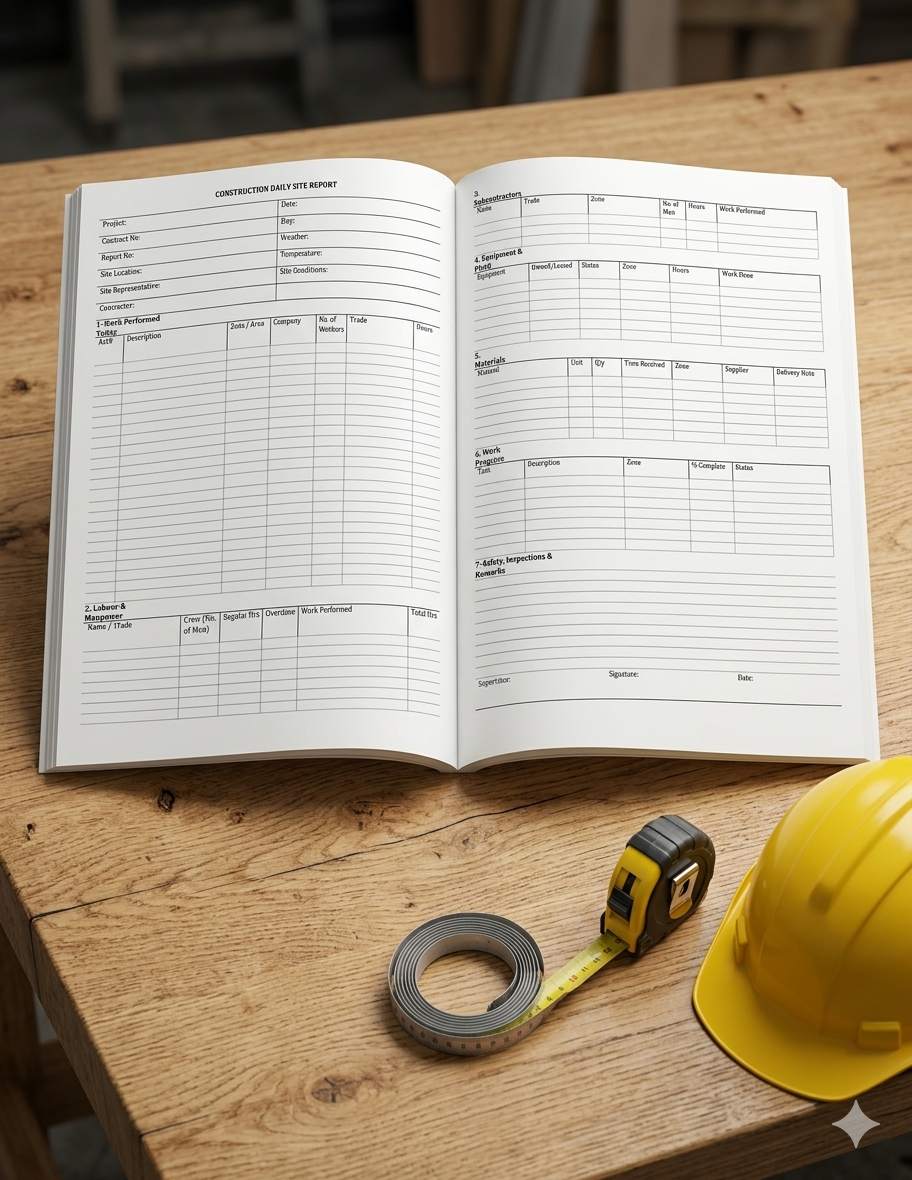
Get it on Amazon >>> Construction Daily Site Logbook: Dayworks and Progress Reports by Macron Venter.
Construction Logbook vs Digital Reporting Tools
With technology evolving, many contractors consider digital solutions. However, physical logbooks still offer significant advantages.
⚖️ Comparison Table
| Criteria | Physical Logbook | Digital Tools |
|---|---|---|
| Reliability | High | Depends on system |
| Legal Acceptance | Strong | Variable |
| Ease of Use | Simple | Requires training |
| Cost | Low | Subscription-based |
| Accessibility | Always available | Needs device/internet |
| Data Integrity | Hard to alter | Editable |
👉 Many professionals still prefer physical logbooks for legal reliability.
Who Should Use a Construction Daily Site Logbook?
This tool is essential for:
👷 Contractors
- Track daily operations
- Manage productivity
🧑💼 Site Managers
- Monitor site performance
- Ensure compliance
📊 Quantity Surveyors
- Verify work done
- Support valuations
🏗️ Foremen and Supervisors
- Record site activities
- Improve coordination
🏢 Project Managers
- Maintain oversight
- Reduce risks
Real-World Example: Why Daily Logs Matter
Scenario:
A contractor submits a claim for 15 days delay due to rain.
Without a Logbook:
❌ No evidence
❌ Claim rejected
With a Logbook:
✅ Weather recorded daily
✅ Lost hours documented
✅ Work stoppages noted
👉 Result: Claim approved
Best Practices for Using a Construction Daily Logbook
To maximize effectiveness:
1. Record Information Daily
Never skip entries—consistency is critical.
2. Be Clear and Detailed
Avoid vague descriptions like “work done.”
3. Record Issues Immediately
Don’t rely on memory.
4. Use Standard Terminology
Ensure clarity across teams.
5. Sign and Verify Entries
Adds authenticity and accountability.
Common Mistakes to Avoid
❌ Incomplete entries
❌ Backdating information
❌ Ignoring weather records
❌ Not recording delays
❌ Poor handwriting or unclear notes
How a Logbook Supports Quantity Surveying
For QS professionals, the logbook is invaluable:
- Validates interim valuations
- Supports variation claims
- Verifies dayworks
- Tracks resource usage
👉 It acts as a primary supporting document in cost management.
Choosing the Best Construction Daily Site Logbook
When selecting a logbook, look for:
- Structured layout
- Industry-specific sections
- Sufficient writing space
- Durable design
- Clear formatting
Benefits Summary
Using a construction daily site logbook helps you:
✔ Maintain accurate records
✔ Improve project control
✔ Support legal claims
✔ Track productivity
✔ Enhance communication
✔ Ensure compliance
A construction daily site logbook is not just a notebook—it’s a critical project management tool.
In an industry where documentation determines outcomes, having a reliable and structured logbook ensures:
- Transparency
- Accountability
- Efficiency
- Legal protection
Final Thought
In construction, memory fades—but written records remain.
If you want to run projects professionally, reduce disputes, and improve profitability, a construction daily site logbook is a must-have tool.
Stop Losing Money on Site Delays
Master your project documentation with the Macron Venter Construction Daily Site Logbook.
- ✅ Detailed Progress Reports: Never miss a site instruction again.
- ✅ Labour & Equipment Logs: Accurate tracking for Dayworks and variation claims.
- ✅ Audit-Ready: Professional layout designed for Contractors and Site Supervisors.
“`
Related Posts:
- Construction Daily Site Logbook: Why Every…
- Construction Daily Site Logbook: The Complete Guide…
- Traverse Land Surveying Field Notebook / Level Book…
- Why You Need a Construction Cost Estimator /…

- Construction Estimator T-Shirt for Quantity…

- Construction Estimator T-Shirt for Quantity…
- 5 Tools for Efficient Construction Project Management
- 5 Tools for Efficient Construction Project Management
- Advantages and Disadvantages of Hiring a…